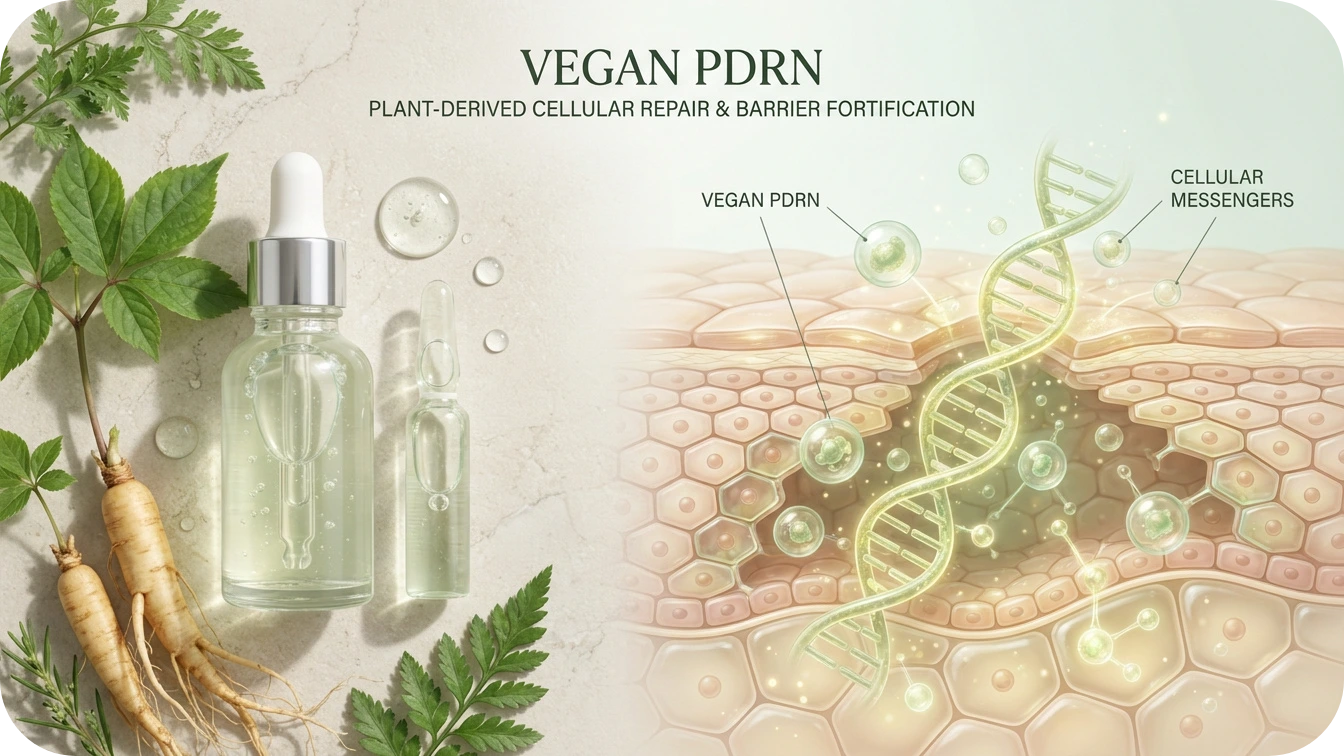
Vegan PDRN in skincare is a plant-based, cruelty-free ingredient designed to help tired or stressed skin repair itself faster. Historically, beauty brands harvested PDRN (polydeoxyribonucleotide) from salmon sperm cells to trigger collagen growth and tissue healing. Today, biotechnology lets scientists brew the exact same skin-renewing DNA fragments using plants like Korean ginseng and gentle microbial fermentation. As a result, you get clinical-grade hydration, visible plumping, and barrier repair without any animal ingredients.
Why Vegan PDRN in Skincare Is Replacing Traditional Salmon DNA
For years, dermatology clinics used salmon-derived PDRN in skin-boosting treatments because its molecular structure closely matches human DNA. However, extracting ingredients from marine animals raises sustainability concerns, potential fish allergies, and ethical questions for cruelty-free shoppers.
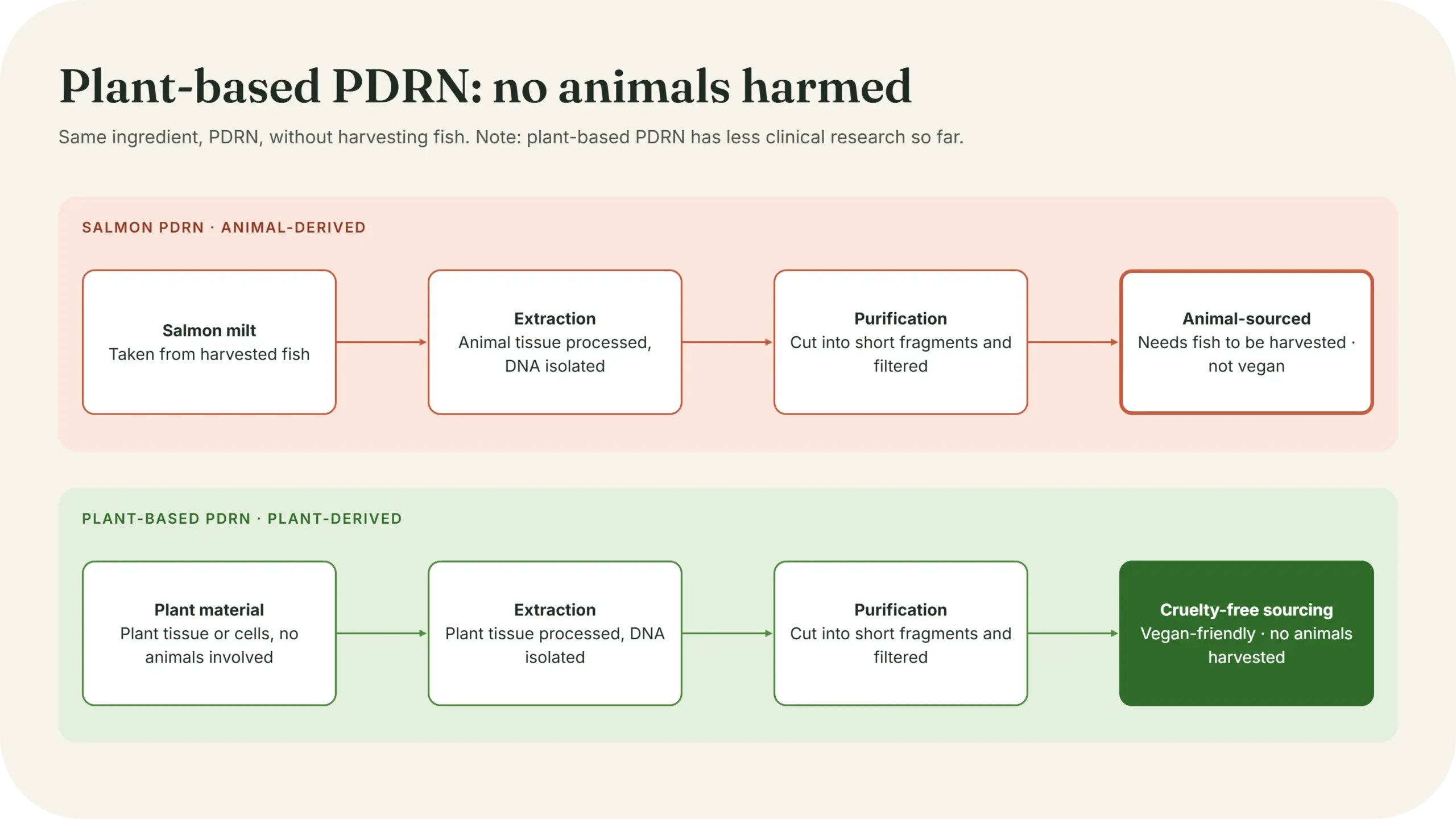
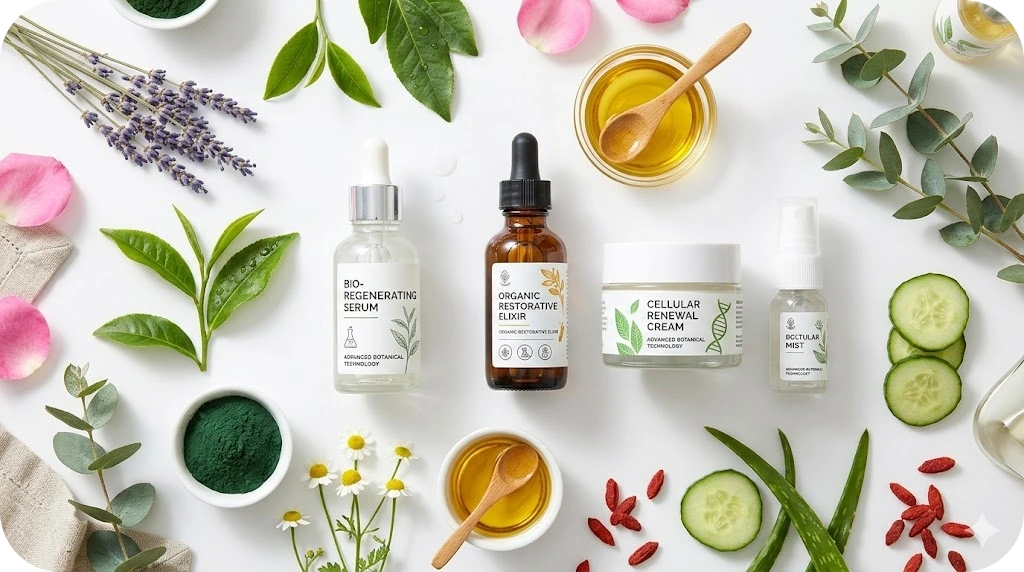
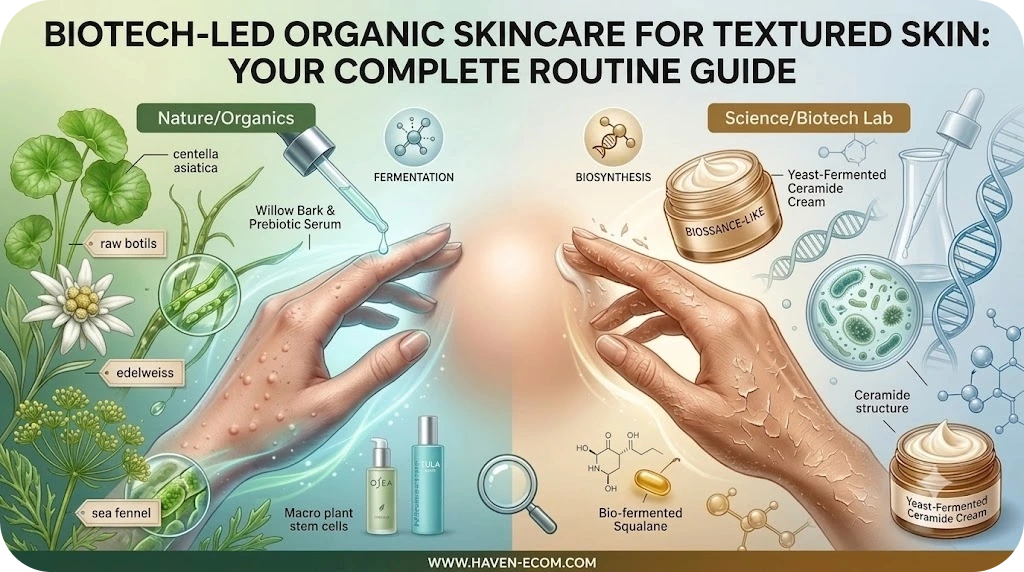
Therefore, cosmetic biochemists developed plant-based PDRN inside clean, controlled laboratories. By fermenting botanical sources such as ginseng root, green tea, or roses, labs create ultra-pure DNA fragments that mimic traditional PDRN’s skin-repairing signals. Furthermore, this biotech process removes fishy odors and marine impurities, making daily serums far more pleasant to apply.
How Does Vegan PDRN in skincare Work?
Think of Vegan PDRN in skincare as a gentle personal trainer coaching your skin cells to act younger and healthier. First, because scientists engineer these DNA molecules at a microscopic size, they slip easily past your outer skin surface rather than sitting on top.
Next, those tiny fragments connect with specific receptors on your skin cells to wake up natural repair pathways. Specifically, peer-reviewed research on polydeoxyribonucleotide tissue regeneration in dermatology shows that PDRN activates adenosine receptors to calm inflammation and encourage fresh collagen. Consequently, your skin rebuilds its moisture barrier steadily without the stinging or peeling caused by harsh acids.
Key Benefits of Adding Vegan PDRN in Skincare Routines
Bringing Vegan PDRN in skincare habits offers multiple benefits for anyone chasing calm, bouncy, “glass skin” radiance. Most importantly, it tackles several common skin frustrations at once without complicating your shelf:
- Faster Skin Barrier Recovery: Helps mend dry, tight, or over-exfoliated skin by supporting healthy cell turnover.
- Deep, Plumping Hydration: Draws and holds water inside skin layers so fine dehydration lines look softer and smoother.
- Visible Redness & Irritation Relief: Quiets everyday inflammation triggered by sun exposure, dry air, or active treatments.
- Cruelty-Free Collagen Support: Encourages natural firmness and elasticity without relying on animal byproducts or wild marine harvesting.
If you love pairing cellular messengers with soothing plant vesicles, explore our beginner’s guide to Phyto-exosomes in skincare to see how these two biotech actives complement each other.
Is Vegan PDRN in Skincare Safe for Sensitive Skin?
Many people hesitate to try lab-engineered actives because they worry about redness or breakouts. Fortunately, plant-based PDRN is remarkably gentle and suits almost every skin type, including reactive, dry, and acne-prone complexions. Because labs produce it in sterile conditions, the finished ingredient stays free from common agricultural pesticides and marine allergens.
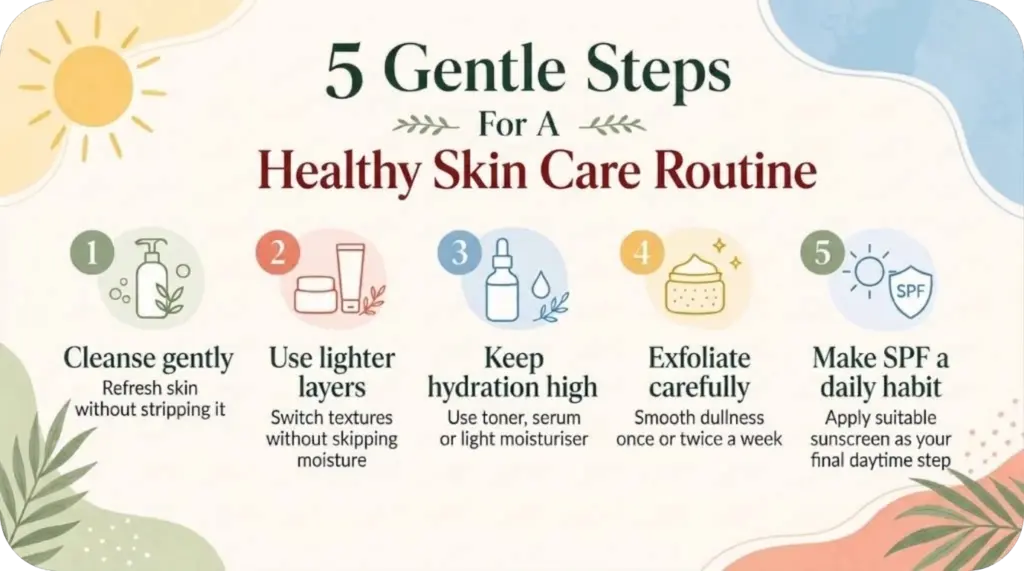
Even so, your skin’s comfort always depends on the entire formula inside the bottle. For instance, forward-thinking clean beauty brands like Innisfree pair green tea-derived PDRN with hydrating hyaluronic acid and soothing bases instead of heavy perfumes. To get the best results, apply your serum right after cleansing as part of a balanced daily skincare routine.
How to Shop Smart for Vegan PDRN in Skincare
Because “glass skin” ingredients are trending everywhere, some brands slap biotech buzzwords onto basic moisturizers with tiny amounts of active ingredients. Before you buy, check the product label using a few simple rules:
- Verify the Botanical Source: Look for clear plant origins on the ingredient list, such as Panax Ginseng Root Extract, green tea, or rose-derived sodium DNA.
- Check for Molecular Size Details: Quality formulas mention low-molecular-weight PDRN, which absorbs far better than oversized surface molecules.
- Skip Harsh Irritants: Avoid serums packed with drying denatured alcohol or strong synthetic fragrances that work against barrier healing.
- Trust Vetted Reviews: Browsing products evaluated through our biotech skincare review standards helps you spot genuine clinical formulas over clever marketing.
Ultimately, Vegan PDRN in skincare proves you no longer need animal-derived ingredients to achieve firm, luminous, resilient skin. By combining clean plant fermentation with proven cellular science, it delivers lasting barrier repair you can feel good about using every day.