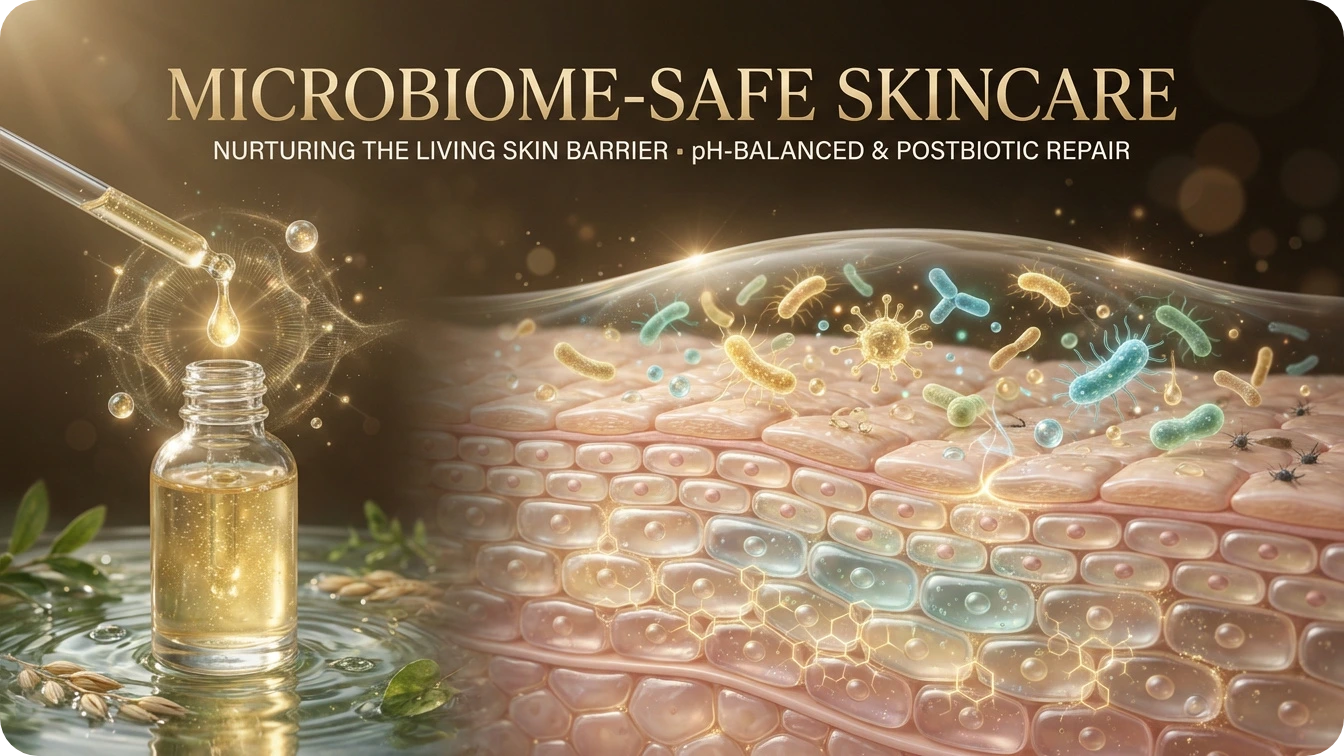
Microbiome-safe skincare is changing the way we care for sensitive, stressed, or breakout-prone complexions. Right now, trillions of helpful, microscopic organisms live peacefully on the surface of your skin. Together, they form an invisible living shield that keeps moisture locked in and blocks harmful irritants from sneaking inside. When you use gentle, pH-balanced formulas designed to feed this ecosystem, your complexion stays calm, clear, and resilient instead of red or inflamed.
Why Microbiome-Safe Skincare Matters for Your Skin Barrier
For decades, beauty marketing encouraged people to scrub away every trace of oil and bacteria until their face felt “squeaky clean.” Unfortunately, harsh foaming cleansers and strong alcohols wipe out your friendly microbes right alongside dirt and sweat. Once those helpful bacteria disappear, your outer barrier weakens quickly.
Consequently, you may notice sudden dryness, stubborn breakouts, or stinging whenever you apply regular creams. Microbiome-safe skincare flips that old approach upside down. Rather than stripping your surface shield, these smart formulas work alongside your body’s natural biology to keep good bacteria thriving.
How pH Balance Supports Skin Microbiome Protection
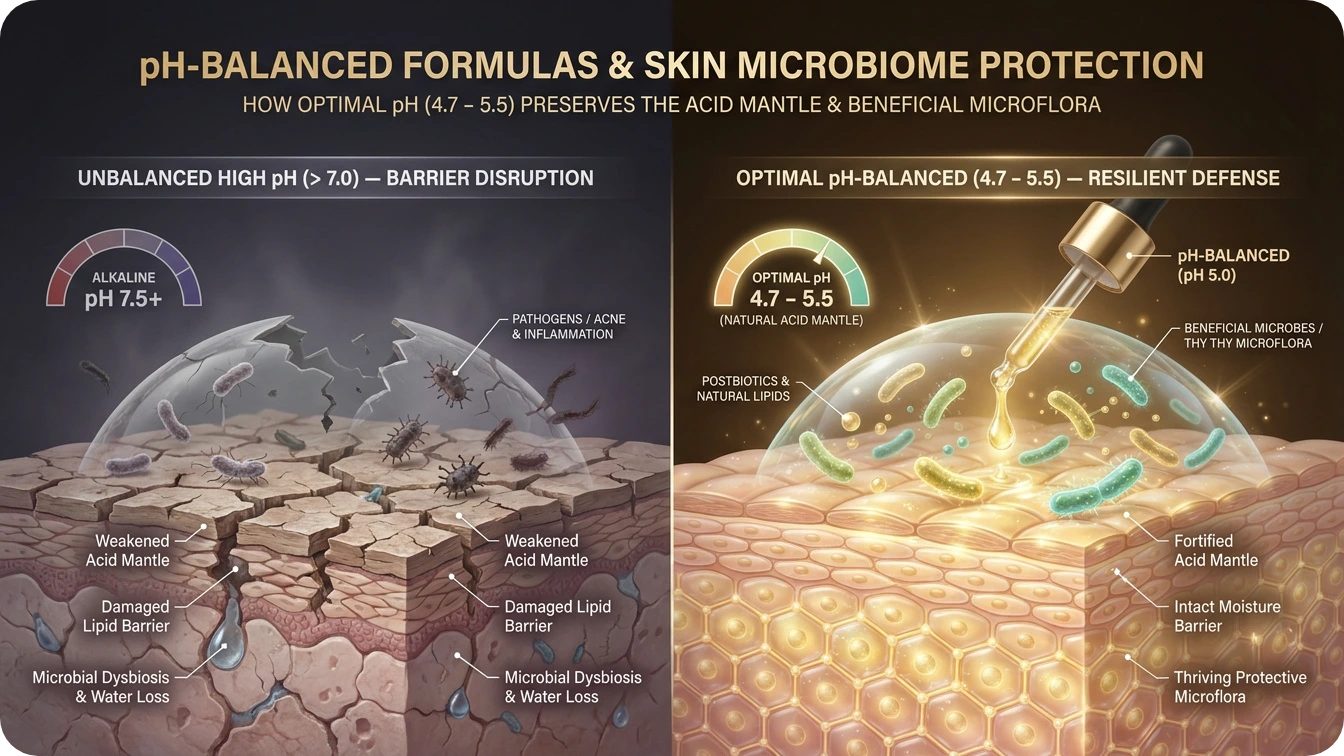
Your skin naturally prefers a slightly acidic environment—usually around a pH of 4.7 to 5.5—often called the “acid mantle.” This mild acidity acts like a security guard that encourages friendly microbes to grow while keeping trouble-making bacteria in check.
However, traditional bar soaps and alkaline washes spike your skin’s pH level within seconds. Research published on skin surface pH and cutaneous microflora shows that raising skin pH disrupts healthy bacteria and slows barrier recovery. Therefore, choosing pH-balanced cleansers and creams is the easiest way to strengthen skin microbiome protection every morning and night.
The Role of Postbiotics in Microbiome-Safe Skincare
You have probably heard of probiotics in yogurt, yet microbiome-safe skincare relies heavily on a gentler cousin called postbiotics. Simply put, postbiotics are the soothing nutrients, enzymes, and peptides that healthy bacteria naturally create during fermentation.
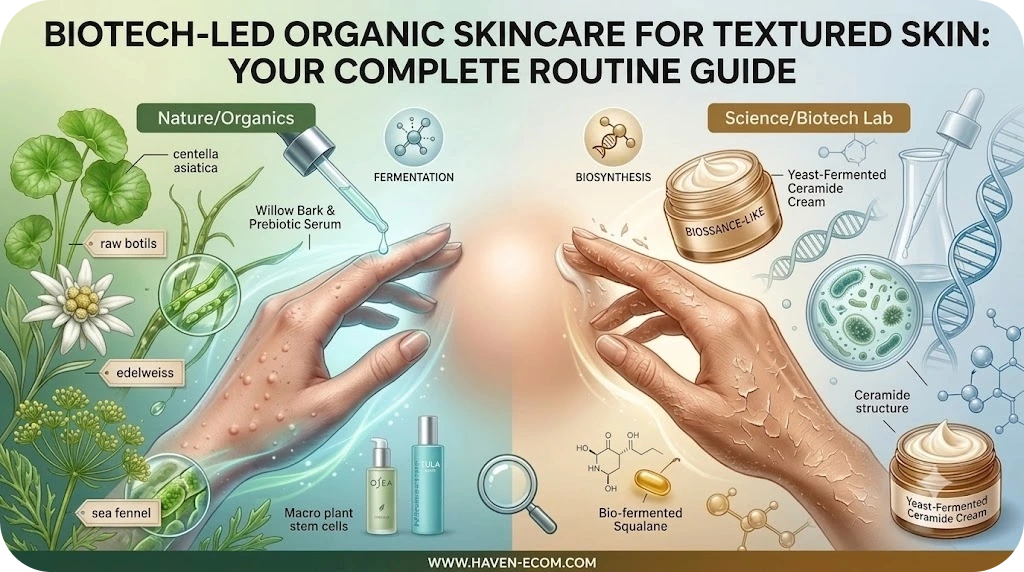
Because postbiotics are non-living molecules, they remain stable inside your serum bottle without needing harsh preservatives. Furthermore, they immediately calm visible redness and reinforce your moisture barrier the moment they touch your face. For example, biotech-driven brands like Gallinée{rel=”nofollow”} build their entire routine around prebiotics and postbiotics to feed good skin flora. If you want to explore more gentle lab-fermented actives, read our overview of biotech skincare products and brands.
Signs Your Routine Needs Microbiome-Safe Skincare
Not sure whether your current bathroom shelf is hurting your living skin shield? Watch out for these everyday warning signs that point toward an imbalanced microbiome:
- Tightness After Washing: Your face feels dry, stiff, or stretched within minutes of rinsing off your cleanser.
- Sudden Sensitivity: Products that never bothered you before suddenly cause tingling, flushing, or itchy patches.
- Persistent Redness & Flakes: Dry spots linger around your nose, cheeks, or chin even when you apply thick moisturizers.
- Recurring Breakouts: Your skin swings wildly between greasy shine and dehydrated patches as it tries to repair itself.
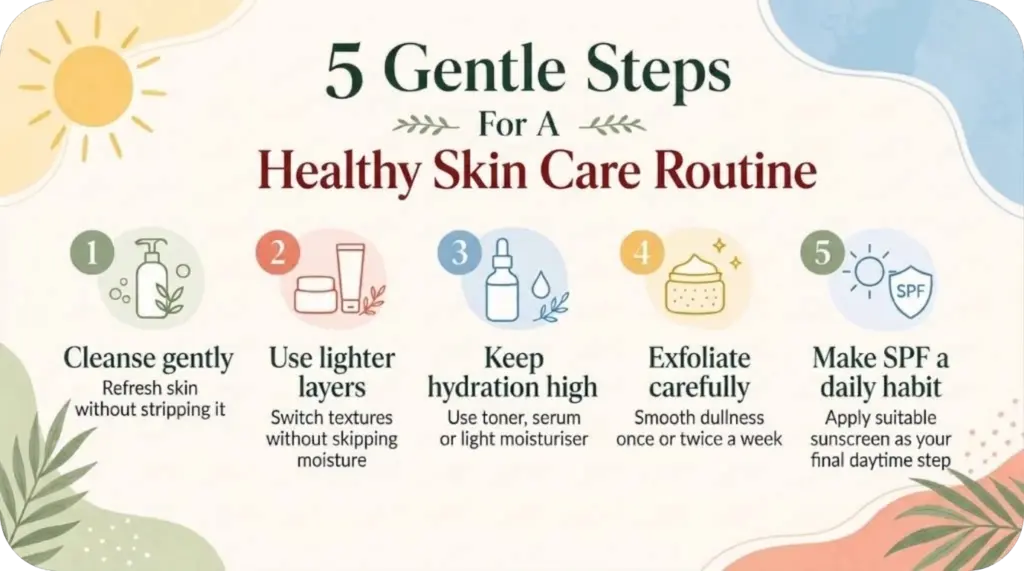
Switching to a simplified daily skincare routine gives your beneficial microbes room to bounce back within a few weeks.
How We Verify Microbiome-Safe Skincare at HAVEN
At HAVEN Responsible Beauty, we never take “microbiome-friendly” marketing stickers at face value. Instead, every formula we review must meet strict pH-balanced and postbiotic-supported benchmarks before earning our recommendation.
Specifically, we check that products avoid harsh sulfates, aggressive preservatives, and heavy synthetic fragrances that disrupt delicate skin tissue. You can explore our full testing checklist inside our biotech beauty review standards. Ultimately, investing in verified microbiome-safe skincare protects your entire cellular ecosystem so your complexion stays balanced, comfortable, and naturally radiant.